|
Glossary of racing terms
A | B | C | D | E | F | G | H | I | J | K | L | M | N | O | P | Q | R | S | T | U | V | W | X | Y | Z
|
| A |
| ALLOWANCE: The amount the race club allows to be deducted from a horse's alloted handicap weight to compensate for the inexperience of its apprentice rider. A Hong Kong apprentice jockey's allowance is reduced in stages from 10 pounds to zero as he or she rides more winners.
APPRENTICE: A rider with limited experience who remains an apprentice until either he has ridden a certain number of winners or the period of his apprenticeship (usually three years) is over.
Return to Top
|
| B |
| BACK: "Down the back" means the back straight (stretch in US) on the side of the track opposite the grandstands. "Out the back" refers to a horse racing at the rear of the field.
BAD DOER: Horse with poor appetite, which means it is hard for the trainer to keep fit.
BANDAGE: Cloth bindings on the lower part of a leg, either because of injury or for support or protection.
BAR SHOE: A horseshoe with a rear bar to protect an injured foot
BAY: Color of horse varying from yellowish tan (light bay) to brown or a dark mahogany
HANGING IN (or OUT): A horse deviating from a straight course because of weariness, infirmity or a reaction to being hit by the whip.
BELL: Signal sounded when starter opens the gates.
BIT: Bar in horse's mouth by which he is guided and controlled.
BLACK TYPE: Designation in sales catalogues for a stakes winner or stakes-placed horse.
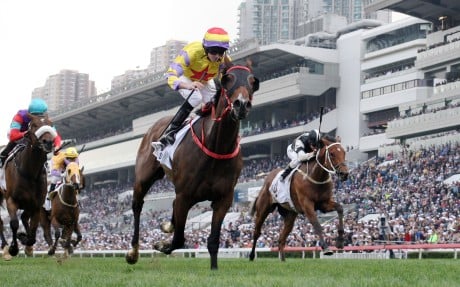
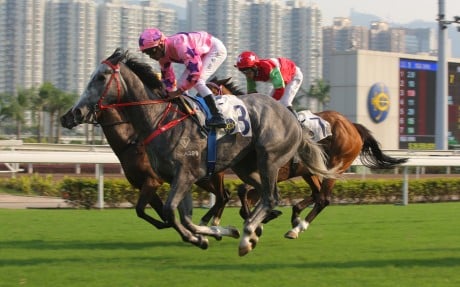
BLANKET FINISH: Horses finishing so closely together they could be covered by a blanket.
BLAZE: White patch on horse's face.
BLEEDER: Horse who bleeds during or after a workout or race due to ruptured blood vessel. In Hong Kong, a horse which has bled twice is banned from racing.
BLIND ALLEY: Being caught in a pocket or such a position behind or between horses that a free course cannot be pursued.
BLINKERS: Device to limit a horse's vision to prevent him from swerving from objects or other horses on either side of him. Its application often improves the performance of horses.
BLISTER: Counter-irritant to ease pain or to treat an ailment.
BLOW-OUT: A short, non-taxing final workout, usually a day or two before a race, designed to sharpen a horse's speed.
BOARD: Totalisator board on which odds, betting pools and other information is displayed.
BOLT: When a horse takes charge of his rider and runs largely without control.
BOTTOM: a horse with "bottom" has stamina.
BOTTOM LINE: Thoroughbred's breeding on female side. The bottom half of an extended pedigree diagram.
BOWED TENDON (a BOW): Rupture of the sheath enclosing the tendon from the knee to the fetlock joint.
BREAK (a horse): To accustom a horse to being ridden and to racing equipment and methods.
BREAKDOWN: When a horse suffers an injury which puts him out of the race, and sometimes out of racing.
BREAK MAIDEN: Horse or rider having their first win.
BREATHER: Restraining or easing off on a horse for a short distance in a race to permit him to conserve or renew his strength.
BREEDER: Owner of dam at time foal is dropped.
BREEDING: A horse's pedigree.
BREEZE: Working a horse at a moderate speed.
BROOD MARE: Female thoroughbred used for breeding.
BROWN: Sometimes difficult to separate from black or dark bay. This color can usually be distinguished by noting finer tan or brown hairs on the muzzles or flanks.
BUCKED SHINS: Inflammation of front of cannon bone to which young horses are particularly susceptible.
BULL RING: A small racetrack, usually less than one mile in circumference.
Return to Top
|
| C |
| CALK: Projection on bottom of horseshoe to give greater traction, especially on a wet track. Mainly used in the United States.
CALL (the): Running position of horses in a race at various points.
CALLER: One who calls the running positions of horses in a race.
CAST: A horse is cast when he lies down in the stall in such a way that he is too close to the wall, and there is a danger that he may not be able to get up by himself without injury.
CHART: A statistical "picture" of a race (from which past performances are compiled), which shows the position and margin of each horse at designated points of call (depending on distance of the race), age, weight carried, owner, trainer, purse, conditions, pay-off prices, odds, time and other data.
CHECKED: When the progress of a horse is stopped because he is cut off or hampered.
CHESTNUT: Horse colour varying from light, washy yellow to dark liver color, between which comes red, gold and liver shades. A chestnut never has black points, mane or tail.
CHUTE: Extension of back or home straights to permit a long straight run after the start.
CLAIMING RACE: Type of graded race in the US in which any horse can be claimed (purchased) for a nominated price.
CLASS: Hong Kong Jockey Club grades horses into eight classes: Premier (the best) followed by class one through to class six. There is a special class, Griffin, restricted to new young horses. Class also is used as a description of quality in a horse.
CLASSIC: Race of traditional importance. Such as the Epsom Derby (UK), Prix de Arc de Triumph (France), Melbourne Cup (Australia), Kentucky Derby, Preakness and Belmont Stakes (US), the Japan Cup and the Hong Kong Derby.
CLERK OF SCALES: An official whose chief duty is to weigh the riders before and after a race to be sure proper weight is carried.
CLIMBING: Refers to a fault in a horse's stride in which, instead of reaching forward, his leg action is abnormally high.
CLOCKER: One who times workouts and races.
CLOSER: A horse who runs best in the latter part of the race, coming from off the pace.
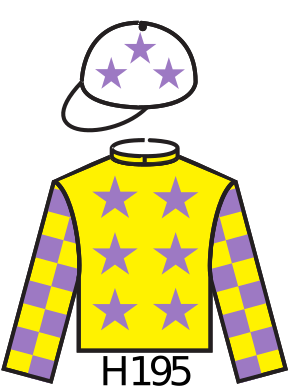
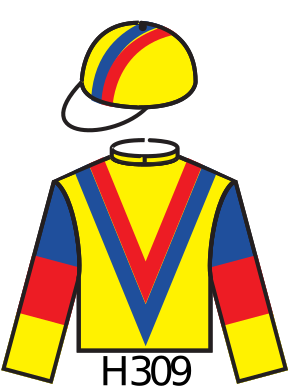
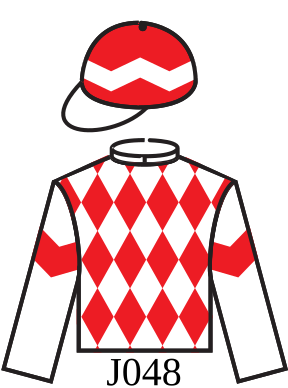
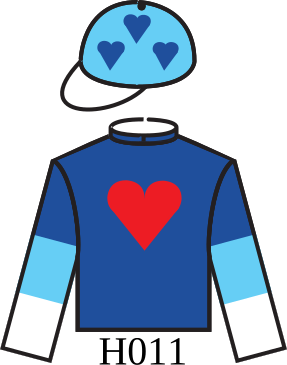
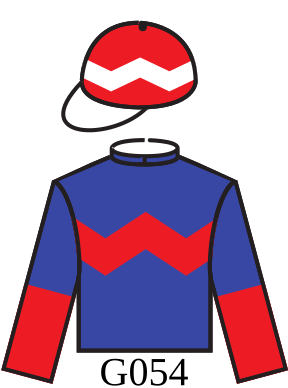
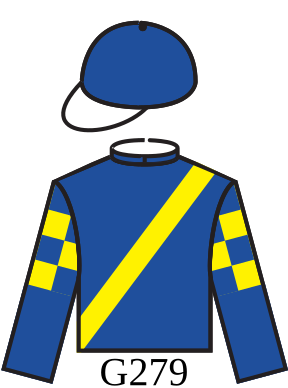
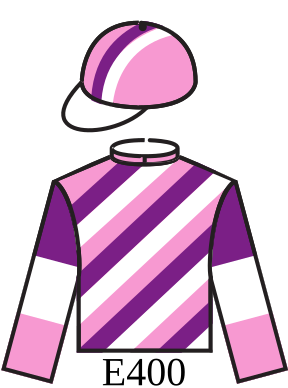
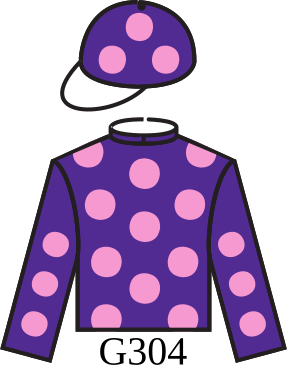
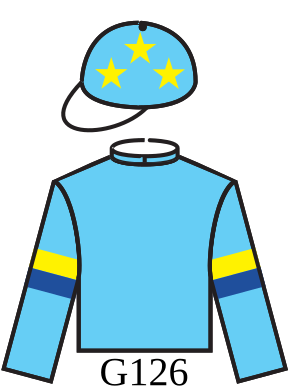
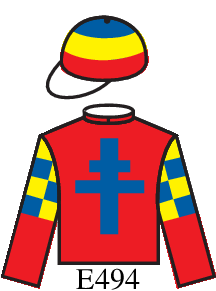
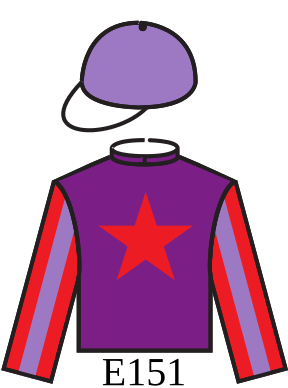
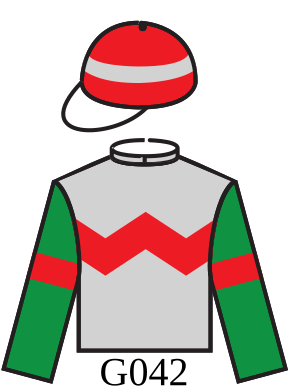
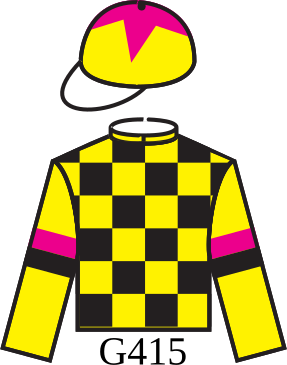
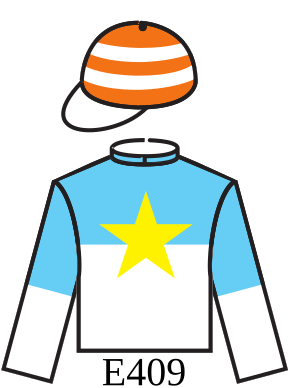
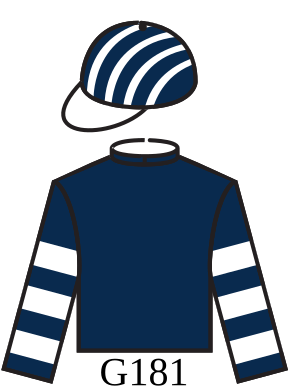
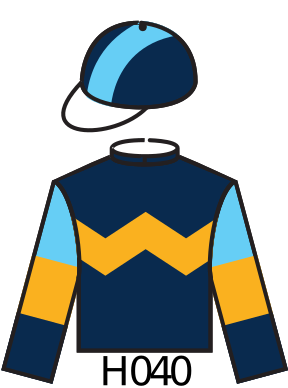
COLOURS: Silk racing jacket and cap worn by riders to denote the ownership of the horse.
COLT: Young male horse which has not been gelded (castrated).
COMPANY: Class of horses in a race, as in: "He is racing in the wrong company".
CONDITIONS: The terms for a race set by the race club, listing eligibility, the basis for weight allocations etc.
CONDITION RACE: An event with conditions limiting it to a certain class of horse, such as: Fillies, 3-year-olds, non-winners of two races other than maiden or claiming, etc.
CONFORMATION: A horse's build and general physical structure; the way he is put together.
CONTRACTED RIDER: Jockey under contract to one stable. Also STABLE RIDER.
COOLING OUT: Restoring a horse, usually by walking, to normal temperature after it becoms overheated in a race or workout.
COUGH: Broadly, a cold.
COUPLED: Two or more horses linked as one entry for betting purposes. In Hong Kong, where the maximum number of horses in a race is 14, this is done for simulcasts of overseas events where there are more than 14 horses running.
CRIBBER (a wind sucker): A horse who clings to objects with his teeth and sucks air into his stomach.
CUP: Trophy awarded to owners of winners.
CUSHION: Surface of track or a layer of the track. Sometimes used to denote a track condition where a thick covering of grass or a surface softened by rain provides a "cushion" for the horse's hooves, which often allows horses with leg problems to run better.
Return to Top
|
| D |
| DAILY DOUBLE: Type of special pool bet - not available in Hong Kong - calling for the selection of winners of two nominated races.
DAM: Mother of a thoroughbred.
DAM SIRE: The sire of a broodmare.
DEAD-HEAT: Two or more horses finishing in an exact tie.
DEAD TRACK: Racing surface which because of rain or some other reason lacks resiliency.
DECLARATION: In Hong Kong and most of the world, a horse confirmed to start in a race. In the U.S, a horse withdrawn from a stake before scratch time.
DISQUALIFICATION: When a horse loses its finishing position by an official ruling for an infraction of the rules.
DISTANCED: A horse which finishes a great distance behind the winner.
DQ: Disqualified.
DRIVING: Strong urging by rider.
DROP DOWN (also class drop): A horse racing against lower class rivals than he has been running against recently.
DWELT: A horse which is slow at jumping from the starting gate.
Return to Top
|
| E |
| EASED: A horse being deliberately slowed by the jockey as part of race tactics or to prevent injury or harm to the horse.
EIGHTH (of a mile): A furlong (220 yards or 660 feet).
ELIGIBLE: Qualified to start in a race, according to the conditions set for it.
ENGAGEMENT: A commitment by a jockey to ride a particular horse.
ENTRY: Two or more horses owned by the same stable or (in some cases) trained by the same trainer and thus running as a single betting unit. (Not in Hong Kong).
EQUIPMENT: Whip, blinkers, etc. Gear carried by a horse in a race.
EVENLY: Description of how a horse is running when he is neither gaining nor losing position or distance during a race.
EXACTA (or PERFECTA): A wager in which the first two finishers in a race, in exact order of finish, must be picked. (Not available in Hong Kong).
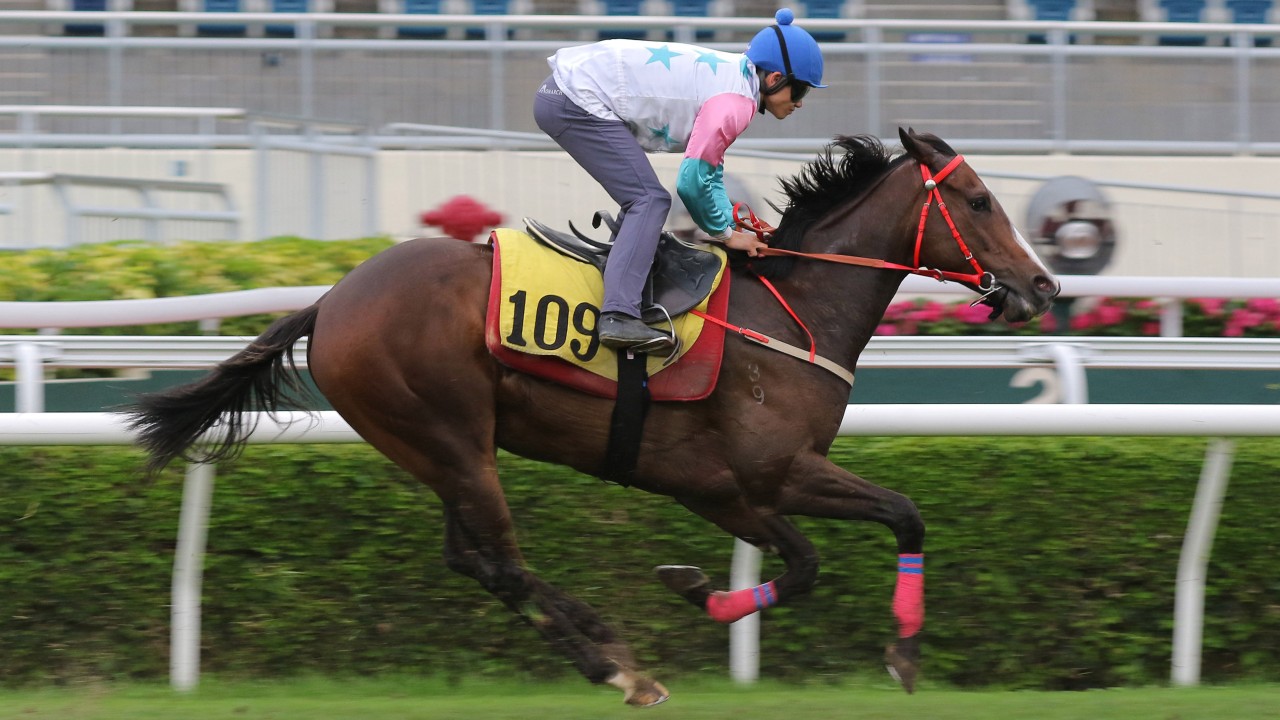
EXERCISE RIDER: Specialist rider who exercises horses in their morning gallops.
EXTENDED: When a horse is forced to run at top speed, or to call on all its reserves.
EXTRA WEIGHT (also over weight): When a horse will carry more weight than its allotted handicap, usually because its jockey is unable to "make the weight".
Return to Top
|
| F |
| FALTERED: Used in some counries to describe a horse that was in contention early but dropped back in the late stages of a race. More drastic than "weakened" but less drastic than "stopped".
FALSE FAVORITE: Horse which is bet down to favoritism when others would appear to have an equal or better chance of winning.
FARRIER: Blacksmith.
FAST TRACK: Racing surface which allows horses to run fast times; one usually which is dry, fast and even.
FEES: Amount paid to rider. Also the cost of nominating, entering or starting a horse in a stakes race.
FENCE: Generally the barrier on the outer side of the racing surface - between the front of the stands and the racing strip - but sometimes used loosely also for the inside running rail.
FIELD: The horses which make up a race.
FILLY: Female horse up to and including the age of four.
FIRING: Applying a searing instrument, hot iron or electric needle to an injured portion of the horse's leg to promote healing of injury or infirmity.
FIRM: Description for the surface of a turf course which usually equates to fast.
FIRST TURN: The first bend the horses negotiate after the start.
FLAG: Signal held by official stationed a short distance in front of the gate at the start of race to denote a proper start.
FLAT RACE: Contested on level ground as opposed to hurdle race or steeplechase.
FLATTEN OUT: When a horse drops his head almost in a straight line with his body because he is fully extended. May also indicate exhaustion.
FLOAT: Special van used for transporting horses.
FOAL: Newly born thoroughbred, or until weaned. Male or female.
FOUNDER: See Laminitis.
FOUR FURLONGS: Half a mile (880 yards or 2,640 feet).
FRACTIONAL TIME: Sectional time recorded in a race, usually for each 400m.
FRESH (FRESHENED): A horse racing after a brief rest.
FRONT-RUNNER: A horse who usually leads (or tries to lead).
FURLONG: One eighth of a mile (220 yards or 660 feet).
FUROSEMIDE: Generic term for a medication for the treatment of bleeders. Most common trade name is Lasix.
Return to Top
|
| G |
| GAIT: The various ways a horse moves: walk, trot, canter, gallop, run, etc.
GALLOP: A type of gait, a fast canter. Also, to ride a horse at that gait.
GATE: Starting mechanism.
GELDING: Castrated male horse.
GET: Progeny of sire.
GOOD TRACK: Where the racing surface is "normal" - neither fast nor slow.
GRAND-DAM (SECOND DAM): Grandmother of a horse.
GRANDSIRE: Grandfather of a horse, sire of the horse's dam.
GRAY: Horse which coat has a mixture of white and black hair.
GRIFFIN: An inexperienced race horse, usually two-year-old or three-year-old; also, a class of race restricted to such horses.
GROOM: A person who cares for a horse in a stable.
GROUP RACE: High-class graded races.
Return to Top
|
| H |
| HALF-BROTHER, HALF-SISTER: Horses out of the same dam by different sires.
HALTER: Like a bridle, but lacing a bit. Used in handling horses around the stable and when not being ridden.
HAND: Unit used in measuring height of horses from withers to ground - about four inches.
HANDICAP: Race for which a handicapper assigns weights to be carried according to each horse's demonstrated ability. Also, to handicap a race, to make selections on the basis of the past performances.
HANDICAPPER: One who assigns weights for handicap race. Also a bettor who makes selections based on past performances.
HANDILY: Working or racing with moderate effort, but more effort than breezing.
HANDLE: In US, amount of money wagered in the pari-mutuel (totalisator) on a race, a programme, or a year.
HANDS & HEELS: A ride where the jockey urged a horse with the hands and does not use the whip.
HEAD: A margin between horses roughly equal to the length of a horse's head.
HEAVY: Very slow condition of track - when it is wet and boggy.
HOME TURN: The final turn before the finish line.
HORSE: Broadly, any thoroughbred regardless of sex. Specifically, an uncastrated male five years old or older.
HORSEY: Description of mare in heat.
HOT-WALKER: Person who walks horses to cool them out after workout or races.
HUNG, HANGING: When a horse moves sideways as well as forward, especially around turns on tight tracks.
HUNG ON: Horse who although tiring after running prominently, manages to hold on to win or finish close up.
HURDLE RACE: Contested over obstacles. A jumping race over lower fences than steeplechase races.
Return to Top
|
| I |
| IN THE MONEY: Finishing first, second or third.
INFIELD: Area within the inner rail of the racetrack.
IN-HAND: Applies to horse not being fully extended.
IMPOST: Weight carried or assigned.
INQUIRY: Review by the course officials to check into a possible infringement of the rules.
IRONS: Stirrups.
Return to Top
|
| J |
| JOG: Slow, easy gait.
JUMPER: Steeplechase or hurdle horse. (Not in Hong Kong).
JUVENILE: Two-year-old horse.
Return to Top
|
| K |
| KNUCKLED: When a horse stumbles slightly.
Return to Top
|
| L |
| LAMINITIS: Inflammation under horny wall of foot.
LASIX: See furosemide.
LEAD: Strap attached to halter to lead a horse.
LEAD (or LEAD PAD): Weights carried to make up the difference when a rider weighs less than the handicap weight a horse is assigned to carry.
LEAD PONY: Horse or pony who accompanies a runner to the starting stalls.
LEG UP: To help a jockey mount his horse.
LENGTH: A measurement of distance between horses in a race roughly equal to the length of a horse from nose to tail, about eight feet.
LUG (in or out): Action of a tiring horse, bearing in or out.
LUNGE: Horse rearing or plunging.
Return to Top
|
| M |
| MAIDEN: A horse who has not won a race. Also applied to non-winning rider.
MAIDEN RACE: A race restricted to horses which have never won.
MAKE A RUN: A forward move through or around the field.
MARE: Female horse five years or older. Also, female of any age who has been bred.
MASH: Moist mixture, hot or cold, of grain and other feed given to horses.
MIDDLE DISTANCE: Broadly speaking, a race longer than a mile and less than 2,400 metres.
MONEY RIDER: A rider who excels in rich races. Also, a rider who can be relied on to win when connections of the horse have bet heavily on it.
MORNING GLORY: Horse who performs well in morning workouts but fails to reproduce that form in races.
MORNING LINE: In US, approximate odds quoted before betting determines exact odds.
MUDDER: Horse who races well on muddy dirt tracks or wet-soft turf surfaces.
MUDLARK: Similar to mudder, only more so.
MUZZLE: Nose and lips of a horse. Also a guard placed over a horse's mouth to prevent him from biting or eating.
Return to Top
|
| N |
| NAVICULAR DISEASE: Corrosive ulcer on the navicular bone, usually in the fore feet.
NEAR SIDE: Left side of a horse; side on which he is mounted.
NECK: Unit of measurement, about the length of a horse's neck (roughly, a quarter of a length).
NOD: Lower the head right on the finish line and win. GET THE NOD: When a horse wins a tight photo-finish.
NOSE: Smallest advantage a horse can win by. In Britain, Australia and Hong Kong, called a short head.
Return to Top
|
| O |
| OAKS: A classic stakes event for three-year-old fillies. (Not in Hong Kong).
OBJECTION: A protest or claim of unfair interference lodged by a rider or course official against another runner.If lodged by an official, it is called an inquiry.
ODDS-ON: Odds of less than even money. In England it is simply called "on," so that a horse "5:4 on" is actually at odds of 4:5, i.e. you win four units for every five you put on.
OFF SIDE: Right side of horse.
OFF TRACK: In US, an off track refers to a wet racing surface.
OFF-TRACK BETTING: Placing bets at legal betting offices away from the racecourse. In Hong Kong, these are run by the Hong Kong Jockey Club and money bet in them feeds into the on-track betting pools.
ON THE BIT: When a horse is eager to run and is pulling at the bit in its mouth.
ON THE NOSE: Betting a horse to win only.
OSSELETS: Bony growth on the fetlock or ankle joint resulting in inflammation of the enveloping membrane of the bone.
OVER-RACING: When a horse is so eager to go forward it is fighting the jockey's attempts to restrain it and often gallops up onto the rear hooves of the horse in front ot it.
OVER-REACHING: When the toe of a horse's hind shoe strikes its forelegs on the heel, or back of the coronet.
OVERLAND: Racing wide throughout; outside other horses.
OVERLAY: A horse at a higher price than he appears to warrant based on his ability.
OVERWEIGHT: When a horse carries extra because the rider cannot make the required weight.
Return to Top
|
| P |
| PADDOCK: Area where the horses parade for public inspection and are mounted before moving to the starting barriers.
PARI-MUTUEL: Form of wagering that originated in France in which all money bet is divided up among those who have winning tickets, after taxes and the club's percentage is deducted.
PAST PERFORMANCES: A record of a horse's race performances used by bettors and handicappers as a basis for making selections.
PATROL JUDGES: Officials who observe progress of race from various vantage points around the track.
PENALTIES: Extra handicap weight assigned to a horse, usually because it has won or placed since the original handicaps were posted.
PHOTO FINISH: A result so close it is necessary to use a finish-line camera to determine the rder of finish.
PICK SIX: Type of wager in which the winners of six nominated races must be selected on one ticket. In Hong Kong is is known as the Six Up, with two dividends declared - one for selection of either the first or second-placed horses in each of the six races, and the second - the Six-Up Bonus, for selection of all six winners. If there is no winning ticket, the bonus pool jackpots to the equivalent meeting the next week.
PLACE: Finish in one of the first three positions in a race. In the US, to finish second.
PLACE BET: Wager on a horse to finish first, second or third. In the US, to finish first or second.
PLATES: Shoes horses wear in races. Racing plates.
POCKET: Trap a horse with others in front and beside him, so that there is no way for him to progress forward.
POLE: Markers at measured distances around the track, marking the distance from the finish.
POST: Starting point. Also can refer to winning post. "Post time" is the time set down for the start of a race.
POOL: Where the amounts wagered on a particular type of bet (such as the Six-Up) are kept in a separate "pool", to be divided only among the winners of that bet, as in the win pool, triple trio pool, quinella pool, etc. Also, the total sum bet on a race.
POST PARADE: Horses going from paddock to starting gate past the grandstands.
POST POSITION: Same as barrier position or draw - position of stall in the starting gate from which a horse starts.
POST TIME: Designated time for race to start.
PREP (or PREP RACE): A workout or a race to prepare a horse for a future engagement.
PROP: Refusing to break with field from gate. Standing flat-footed. Also, when a horse suddenly stops running by extending his forefeet.
PUBLIC TRAINER: One whose services are not exclusively engaged by a single stable and who accepts horses from a number of owners.
PURSE: A prize of money to which owners of competing horses do not contribute.
Return to Top
|
| Q |
| QUARTER: One quarter of a mile (440 yards or 1,320 feet).
QUARTER CRACK: Crack in wall of hoof running downwards from coronet.
QUARTER-HORSE: Breed of horse especially fast for a quarter of a mile, from which its name is derived.
QUARTER POLE: Marker one-quarter mile from the finish.
QUINELLA: Wager in which two horses are selected. They must finish first and second and the order does not matter.
Return to Top
|
| R |
| RABBIT: A horse that is considered to have little chance of winning a race but is entered purely to ensure a fast pace and to tire out the other front-runners, softening up the competition for the benefit of another horse.
RAIL RUNNER: Horse who prefers to run next to the inside rail.
REFUSE: When a horse will not break from the gate. In jumping races, balking at the jump.
RESERVE: A horse which is placed on standby and is allowed to race only if one of the original field is withdrawn (scratched).
RIDDEN OUT: Refers to a horse that has been ridden to give everything he has got. Nothing held in reserve.
RIDE SHORT: Use short stirrup leathers.
RIDGLING: A horse with one or both undescended testes.
ROAN: Mixture of white and red (or brown) hairs (mainly US).
ROARING: Deep, prolonged cough, generally when a horse is galloping.
ROGUE: Ill-tempered horse.
ROMP: Running (or winning) with utmost ease.
ROUTE: In US, a race distance of a mile or longer.
ROUTER: Horse who performs well at distance races.
RUN-OUT BIT: A special type of bit to prevent a horse from bearing out (or in).
Return to Top
|
| S |
| SADDLE CLOTH: Cloth under the saddle on which number (and sometimes horse's name) denoting post position is displayed.
SAVAGE: To bite another horse or a person.
SCALE OF WEIGHTS: Range of handicap weights to be carried by horses in a race according to age, distance, sex, and time of year.
SCHOOLING: Accustoming a horse to starting from the gate and to teach him racing practices. In steeplechasing, more particularly to teach a horse to jump.
SCHOOLING LIST: List of horses required by the starter to school at the starting gate before being permitted to race.
SCRATCH: To be taken out of a race.
SECOND CALL: The second call of the running order during a race by the broadcaster.
SECOND DAM: Grandmother; grand-dam.
SESAMOID: Sesamoid bones are located at the back of the fetlock, the joint formed by the pastern bone and the cannon bone.
SET DOWN: A suspension. Also, put to a drive, or asked to run by a jockey.
SEVEN FURLONGS: Seven eighths of a mile (1,540 yards or 4,620 feet).
SEX ALLOWANCE: Fillies and mares, according to their age and time of year, are allowed to carry three to five pounds less when meeting males.
SHADOW ROLL: Usually a lamb's wool roll halfway up the horse's face to keep him from seeing his own shadow.
SHANK: Rope or strap attached to a halter or bridle by which a horse is led.
SHED ROW: Stable area. A row of barns.
SHORT: A horse in need of more work or running out of time to reach winning form.
SHOW: In US, third position at the finish.
SHOW BET: Wager on a horse to finish in third or better.
SILKS: Jacket and cap worn by riders which designate owner of the horse.
SIMULCAST: Race televised to other tracks, OTB offices or other outlets.
SIRE: Father of a horse.
SIX FURLONGS: Three quarter of a mile (1,320 yards or 3,960 feet).
SLOPPY: Condition of racing surface for dirt track - wet on surface with firm bottom.
SLOW: Footing that is worse than good but better than heavy.
SNUG: Mild restraining hold by rider.
SOLID HORSE: Contender.
SPEEDY CUT: Injury to knee or hock caused by a strike from the opposite foot.
SPIT THE BIT: When a horse quits running against the bit, usually because of fatigue.
STAKES-PLACED: Finishing first, second or third in a stakes race.
STAKE: A race (usually a feature race) for which owner must pay up a fee to run a horse. The fees can be for nominating, maintaining eligibility, entering and starting, to which the track adds more money to make up the total purse. Some stakes races are by invitation and require no payment or fee.
STAKES HORSE: One capable of competing in such events.
STALLION: Uncastrated male horse.
STALL WALKER: Horse that moves about his stall and frets rather than rests.
STAR: Small patch of white hair on a horse's forehead.
STARTING GATE: Mechanical device having partitions (stalls) for horses in which they are confined until the starter releases the doors in front to begin the race.
STAYER: Stout-hearted horse who can race long distances.
STEADIED: A horse being taken in hand by his rider, usually because of being in close quarters.
STEPS UP: A horse moving up in class to meet better runners.
STEWARDS: Top officials of the meeting responsible for enforcing the rules.
STEEPLECHASE: A jumping race over high obstacles.
STICK: Slang for a jockey's whip.
STICKERS: Calks on shoes which give a horse better traction in mud or on soft tracks US).
STOCKINGS: White legs below the knees.
STRETCH: Final straight portion of the racetrack to the finish (US).
STRIDE: Manner of going. Also distance covered after each foot has touched the ground once.
STRIP: Markings of a horse. White hairs running partway down the face.
STRIPE: A white marking running down a horse's face to bridge of nose or below.
STUD: Male horse used for breeding. Also breeding farm.
STUD BOOK: Registry and genealogical record of the breeding of thoroughbreds.
SUBSCRIPTION: Fee paid by owner to nominate horse for a stakes race or to maintain eligibility for a stakes race.
SUSPEND (or SUSPENSION): Punishment for infraction of rules. Offender denied privileges of racetrack for specified period of time. If permanently suspended: Ruled Off.
SWAYBACK: Horse with a dipped backbone.
Return to Top
|
| T |
| TACK: Riders' racing equipment. Also applied to stable gear.
TAKE (or TAKEOUT): Commission deducted from totalisator (mutuel) pools which is shared by the club and the government.
TAKEN UP: A horse pulled up sharply by his rider because of being in close quarters.
THRUSH: Inflammation of the cleft of the frog.
TIGHT: Description of a horse which is fit to race.
TONGUE STRAP: Strap or tape bandage used to tie down a horse's tongue to prevent it from choking in a race or workout.
TOP LINE: Thoroughbred's breeding on his sire's side.
TOPWEIGHT: Highest weight assigned or carried in a race.
TOTALISATOR (the Tote): Pari-mutual wagering system in which all money bet is divided up among those who have winning tickets, after taxes and the club's percentage is deducted; also (1) the organisation administering the system and (2) machine which sells and records betting tickets and calculates and displays payout figures.
TOUT: One who gives tips on racehorses, usually with expectation of personal reward.
TRACK BIAS: A racing surface that favours a particular running style or position, such as horses that run in the lead or on the rail.
TRACKWORK: The training sessions horses are put through to prepare and condition them for racing, also called workouts.
TRACK RECORD: Fastest time at a distance recorded at a particular track.
TRIAL: Workout which is in the form of a mock race.
TIERCE (TRIFECTA): A wager for which you must pick the first three finishers in exact order.
TRIP: A horse's most suitable distance..
TURF COURSE: Grass course.
Return to Top
|
| U |
| UNDERLAY: A horse racing at shorter odds than it should.
UNDER PUNISHMENT: Horse being whipped and driven.
UNDER WRAPS: Horse kept under stout restraint in a race or workout.
UNTRIED: Not raced or tested for speed. Also a stallion who has not been bred.
Return to Top
|
| V |
| VALET: Person who attends riders and keeps their wardrobe and equipment in order.
Return to Top
|
| W |
| WALKOVER: Race which scratches down to only one starter who merely gallops required distance. A formal gesture required by rules of racing. An uncontested event.
WARMING UP: Galloping horse on way to post.
WASHY: Horse breaking out in nervous sweat before race.
WEAVING: Swaying motion in stall, or act of threading way through field in race.
WEIGHT-FOR-AGE: Fixed scale of weights to be carried by horses according to age, sex, distance of race and season of year.
WHIP: Instrument, usually of leather, with which rider strikes horse to increase his speed. Also called bat, stick and gad.
WINDED: Horse breathing with difficulty after workout or race.
WITHERS: The highest point of a horse's shoulder.
WORK: To exercise a horse. A workout.
Return to Top
|
| X |
Return to Top
|
| Y |
| YEARLING: Thoroughbred between the first New Year's Day after being foaled and the following January 1.
YIELDING: Condition of turf course with a great deal of moisture.
Return to Top
|
| Z |
Return to Top
|
|